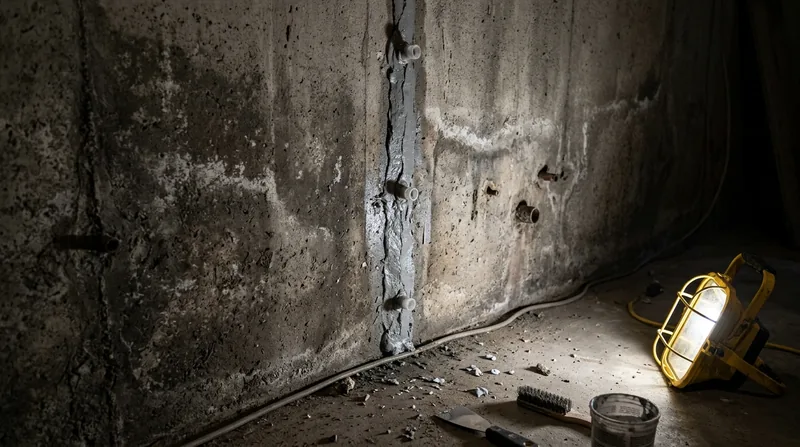


Foundation Crack Repair in Binghamton
If you have a crack in your basement wall, you already know the pattern: a hairline in July becomes a damp stripe every March, and by the time the snowmelt runs off the South Side hills, that stripe is a puddle on the floor. Foundation Crack Repair in Binghamton starts with reading the crack itself, not with a tube of hydraulic cement. This city sits where the Chenango meets the Susquehanna, and the ground under your footing is either glacial till on a steep slope or river flat that took water in 2006 and again in 2011. Both push water at your wall.
We inject non-structural cracks with epoxy or polyurethane, and we tell you plainly when a crack is a symptom of something bigger. If hydrostatic pressure is driving water through the wall, sealing the crack alone is a bandage, and we will say so. Call (607) 862-8699 and we will look at the wall before we quote anything. Start with a free basement inspection if you are not sure what you are looking at.
Why Cracks Open Here: Binghamton's Stone, Brick, and Poured Walls
The building stock tells you what to expect. West Side and Riverside Drive Victorians from the 1870s to 1910s sit on stone and brick foundations with no modern footing drain, and those walls move with the frost. First Ward two-families and the 1900s to 1930s factory-worker houses in Johnson City and Endicott have full basements poured or block-built a century ago. South Side and Vestal ranches from the 1950s to 1970s sit on block, and the newer poured walls in Vestal, Chenango, and Kirkwood crack along shrinkage lines and cold joints.
- Freeze-thaw cycles open vertical cracks in block walls and step cracks at the corners.
- Glacial clay till on the hillsides holds meltwater against the footing and drives hydrostatic pressure through the wall.
- River flats in the First Ward and along the Susquehanna raise the water table after a wet spring.
- Tree roots from the maples, oaks, and hemlocks that shade these lots find old weeping tile and plug it.
- Original stone foundations settle unevenly and open mortar joints that were never meant to be waterproof.
Every one of those failure modes calls for a different repair, which is why we inspect before we inject.
Key info: A home on Riverside Drive with a stone foundation and a stair-step crack at the corner is not the same job as a 1990s poured wall in Vestal with one clean vertical shrinkage crack. The first may need structural evaluation and carbon fiber straps; the second is a straightforward injection.
For the official word on what work needs a permit in this area, check the City of Binghamton building department before any structural repair begins. Rules vary by jurisdiction and the department is the authority, not us.
How We Diagnose and Repair a Foundation Crack in Binghamton
We do not patch one-size-fits-all. The first step is reading the crack: width, direction, whether it is wet now or only after rain, whether the wall is bowing, and whether efflorescence shows water has been moving through it for years. That determines whether you get injection, structural repair, or a drainage fix behind the wall.
- We walk the basement and the exterior grade, checking downspout extension and how water sheds off the lot.
- We map the crack and check for bowing with a straightedge and plumb line.
- We clean the crack and set injection ports at the correct spacing for its width.
- We inject epoxy for structural, dry cracks and polyurethane for wet, active leaks that need to seal and stay flexible.
- We finish the surface and tell you what to watch for over the next wet season.
If the inspection shows the crack is really a drainage problem, we say so and point you to the right fix rather than selling an injection that will fail.
Key info: On a North Side block wall we found a wet horizontal crack at mid-height with efflorescence below it. The crack was not the cause; the footing drain was plugged and water was sitting against the wall. Injection would have bought one season. The honest answer was an interior drain tile system to relieve the pressure first.
Injection Methods Compared: Epoxy vs Polyurethane vs Structural Repair
The table below is how we match the method to the crack. We pick from it after inspection, not before.
| Approach | Description | Best for |
|---|---|---|
| Epoxy injection | Two-part structural epoxy fills the crack and bonds the concrete back together. | Dry, non-moving vertical or shrinkage cracks in poured walls. |
| Polyurethane injection | Water-reactive foam expands to fill and seal an active leak. | Wet, seeping cracks and cold joints that need a flexible seal. |
| Carbon fiber straps | Straps anchored to the wall resist inward movement at the crack. | Cracks tied to a bowing wall or ongoing movement. |
| Wall anchors | Exterior anchors pull a moving wall back toward plumb. | Walls pushed in by glacial till and hydrostatic pressure. |
| Drainage correction | Relieves the water pressure that caused the crack instead of the crack alone. | Wet walls, plugged footing drains, high water table. |
Foundation Crack Repair Cost in Binghamton: What to Expect
Most single-crack injection jobs in this market start around $450. That covers a typical vertical or shrinkage crack, port setting, injection, and cleanup. The price moves up with the number of cracks, wall height, access, and whether the crack is wet and active or dry and structural.
The real driver is what the crack is telling you. A bowing wall that needs carbon fiber straps or anchors is a different scope than a single injected crack, and we price it after inspection. Getting two or three estimates is smart, and make sure each one is quoting the same repair, not one injection against one full drainage job.
Our pricing overview lays out the full range. We give you a number on site, not a range that doubles later.
Hiring a Foundation Crack Repair Contractor Near Me in Binghamton
Ask three questions before you sign anything. First, are they licensed and insured for structural work in New York, and can they show a certificate. Second, will they inspect the wall or just quote an injection over the phone. Third, do they understand that a crack in a 1900s Johnson City block wall is a different animal than one in a 2010 poured wall in Vestal.
Check references from jobs in Broome County, and ask whether the work required a permit from the local building department. We are a Basement Health Association member and we carry a transferable warranty on our work. Reach out through our contact page and we will set up a look at your wall.
One more thing: if a contractor promises a lifetime warranty or tells you a crack is nothing without looking at it, keep calling. Honest guidance is the whole job.
Foundation Crack Repair in Binghamton: Pricing Guide
| Service | Price | Details |
|---|---|---|
| Single crack injection (epoxy or polyurethane) | Starting at $450 | Includes port setting, injection, and cleanup for one typical vertical or shrinkage crack, dry or active. |
| Multiple crack injection | Starting at $750 | Priced per crack after inspection; wall height, access, and whether cracks are wet or dry move the number. |
| Structural repair (carbon fiber or anchors) | On estimate | Needs an on-site look at wall movement, bowing, and soil pressure before any number is given. |
| Travel | Included | in Binghamton and surrounding Broome County areas, no separate call-out or mileage fee. |
| Estimate | Free | Response within 24h at (607) 862-8699, no obligation to book. |
Indicative pricing, the exact cost depends on square footage, finish, and site access. Free personalized estimate within 24h at (607) 862-8699.


